Stillness in Movement, Movement in Stillness: The Unity of Yin and Yang in Taijiquan
Alex Fricke - Thursday, September 10, 2026

THE BODYIn Wuji posture, standing naturally, and Standing Post training, you could call both “standing still”. Yourmuscles are making continuous small adjustments to find the correct posture; tightening here,releasing there; holding you upright against gravity. We learn to align and release, the soft tissue sinksdown. Blood is pumped around the body by the heart. We breathe in and out, Qi is rising and falling. Allthese things can be considered movement. There is the movement of your mind; for instance-the internalinstructions ... read more
Depth Over Dozens: Rethinking Progress in Tai Chi and Qigong
Peter Eves - Friday, August 28, 2026
You’ve just finished learning a new Tai Chi form. The movements feel fresh, your body is warm, and there’s a quiet sense of accomplishment. Then, almost immediately, the question arises: “What’s next?”As a Tai Chi and Qigong teacher, I hear this often especially from Western students and younger practitioners: “Can we learn the next Yang form?” When do we start weapons?” “Is there another Qigong set I should add?” The enthusiasm is genuine and heart-warming yet after years of teaching ... read more
Could Tai Chi be the Best Thing You Ever do for Your Balance?
Peter Eves - Thursday, June 18, 2026
The surprising science behind why we lose our balance as we age and how an ancient practice is helping thousands of Australians stay on their feet.Nobody thinks much about their balance until they nearly lose it.Maybe you’ve grabbed a railing that wasn’t there. Stumbled on a gutter you didn’t see. Felt momentarily unsteady stepping off a kerb. Most of us brush these moments off. But they are early warning signs of something that deserves our full attention.“Over 30% of Australians ... read more
Why the Wǔ Symbol is so Important to Anyone Practicing Chinese Martial Arts
Tara Brayshaw - Saturday, February 28, 2026
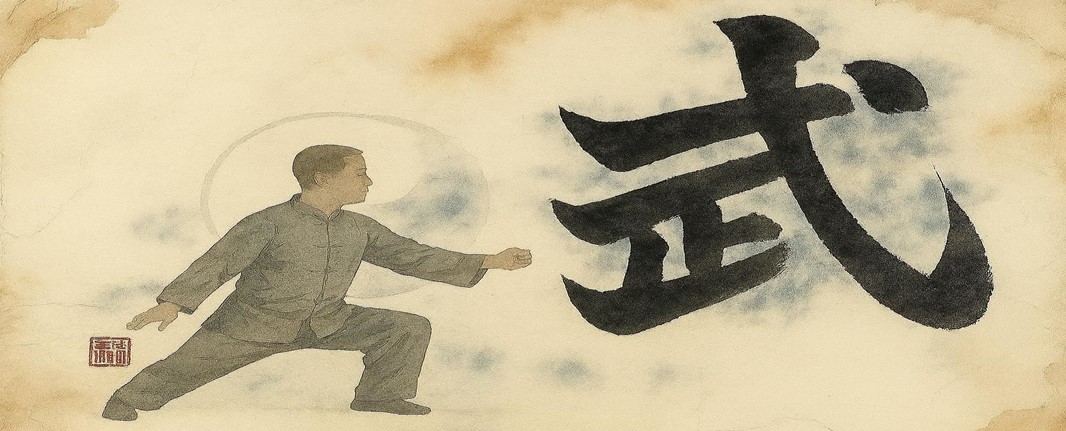
The Wǔ (武) symbol sits at the heart of Chinese martial arts (Wǔshù), and its significance runs far deeper than its direct translation of “martial” or “military.” The character embraces the philosophy that underpins all that is important to our arts and our lives.The Meaning Encoded in the Character 武 (Wǔ)At first glance, 武 is often translated as “martial,” but the character is a fusion of two ancient components:•止 (zhǐ) — to stop, halt, or bring something to a standstill•戈 ... read more
The Year of the Wood Snake and Tai Chi/Qigong: A Harmonious Interplay
Tara Brayshaw - Tuesday, January 21, 2025
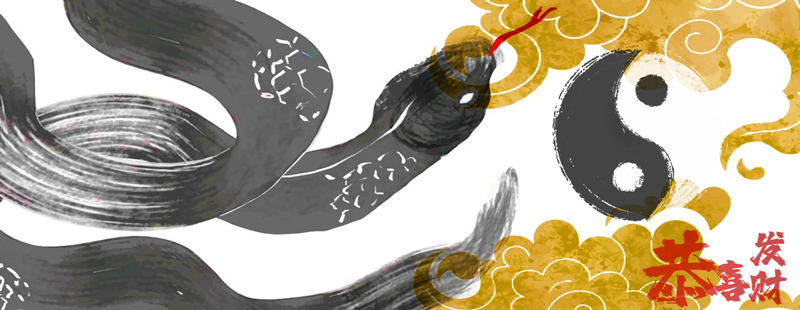
Chinese New Year, also known as Lunar New Year or Spring Festival, is China’s most important festival with a rich history spanning approximately 3,500 years. Its origins are believed to trace back to the Shang Dynasty (1600–1046 BC), when people held sacrificial ceremonies in honour of gods and ancestors at the beginning/end of each year.In 2025, we celebrate the Year of the Wood Snake. The snake is often affectionately referred to as the ‘little dragon’, the snake follows the dragon ... read more
An Introduction to the Six Harmonies in Taijiquan
Peter Eves - Wednesday, November 06, 2024
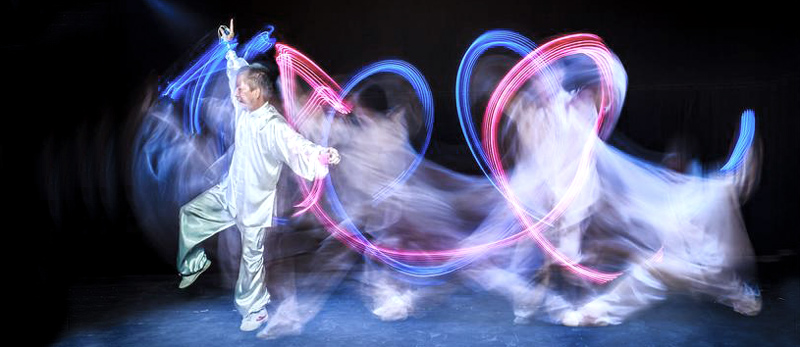
Taijiquan (Tai Chi) is a martial art transcending physical movement. It is a holistic practice that weaves together the internal and external aspects of the human experience to cultivate balance, harmony, and inner strength. Central to this practice are the internal and external harmonies, which guide practitioners in aligning their mind, energy, and body.The internal harmonies—Shen, Yi, Qi and Jin —focus on the inner workings of the spirit, intention, and energy. These principles teach us to cultivate a calm and ... read more
Tai Chi Lessons from a Broken Piano: Work with What You Have
Tara Brayshaw - Friday, September 13, 2024
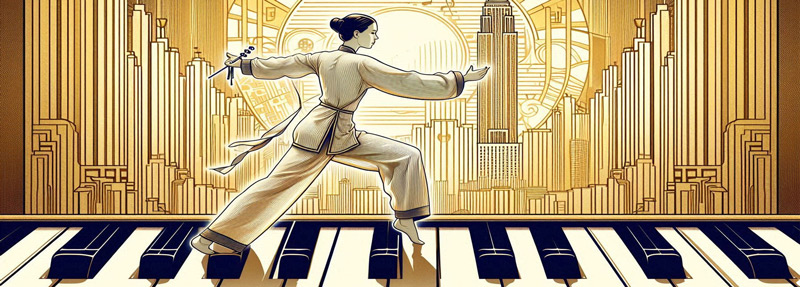
How often do we see videos of Champion Tai Chi Performers or “Masters” and say, “If only I could do that but I’m… too {uncoordinated} {big} {short} {old} {insert another issue here}, have {arthritis} {bad knees} {a neurological condition} {insert another issue here}, don’t have {flexibility} {balance} {strength} {insert another issue here}.” If you think that way, then you are very wrong. Real Tai Chi isn’t about having the highest kick, the lowest stance or the greatest endurance. It’s about ... read more
Tai Chi and Cage Fighting: Zhang WeiLi, China’s UFC Champion
Tristan Davenport - Wednesday, July 03, 2024
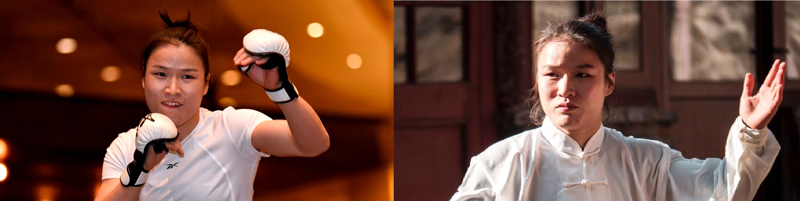
On April 14th, Ultimate Fighting Champion 300 unfolded—a historic combat sports event that left an indelible mark. Twelve current and former champions from various divisions and promotions converged, setting records for ticket sales and pay-per-view. At the heart of it all was Zhang Weili, a two-time strawweight champion, trailblazer in women’s MMA, and devoted Tai Chi practitioner.Weili’s roots trace back to Hanan in Hebei Province, a cradle of Tai Chi culture. It’s where Yang Lu Chan (founder of Yang Style ... read more
The 21st WTQA Festival 2023 - My First Wushu Tai Chi Qigong Festival
Tristan Davenport - Friday, December 01, 2023
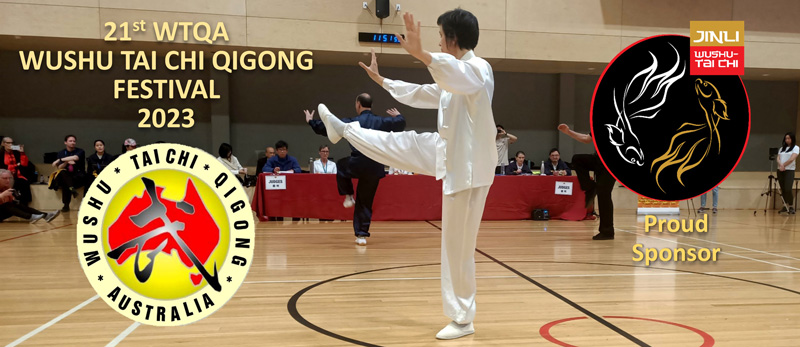
I was so excited to hear that the WTQA (Wushu Tai Chi Qigong Australia Inc) were going to start holding their annual festivals again here in Melbourne and that I was going to be involved in it as part of JinLi. I had no idea what to expect, other than it was a fantastic day, I would meet lots of people, see lots of incredible Tai Chi, Wushu and Qigong, and get a true taste of what it means to ... read more
Fortune, Sex, and a Good Death: The Bat in Chinese Symbology
Tristan Davenport - Wednesday, June 07, 2023
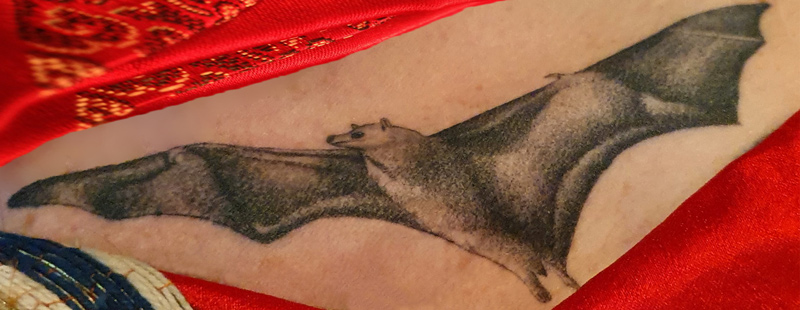
A symbol of Fortune, Sex, and a Good Death. The bat is all of these in the Chinese culture, these facts were unknown to myself when I had the illustration of an Eastern Grey Flying Fox tattooed to my chest. I had chosen the image as for me, it is a symbol of the bush, of home. Of course, it didn’t hurt that my other, very western associations were of horror, the gothic, grim fairy tales and demonic wings, an ... read more
Recent Posts
- Stillness in Movement, Movement in Stillness: The Unity of Yin and Yang in Taijiquan
- Depth Over Dozens: Rethinking Progress in Tai Chi and Qigong
- Could Tai Chi be the Best Thing You Ever do for Your Balance?
- Why We Teach Ba Duan Jin Health Qigong
- Why the Wǔ Symbol is so Important to Anyone Practicing Chinese Martial Arts
- The Year of the Fire Horse – Ride it without Fear
- Caring for the Self
- Eight Energies, Five Steps, Two Weeks, and a Lifetime of Practice: Training at Beijing Sports University 2025
- Qigong: A Guide to Understanding the Many Paths of Energy Cultivation
- The Year of the Wood Snake and Tai Chi/Qigong: A Harmonious Interplay
Tags
Archive
- September 2026 (1)
- August 2026 (1)
- June 2026 (1)
- March 2026 (1)
- February 2026 (1)
- January 2026 (1)
- December 2025 (1)
- November 2025 (1)
- March 2025 (1)
- January 2025 (1)
- November 2024 (1)
- September 2024 (1)
- July 2024 (1)
- January 2024 (2)
- December 2023 (1)
- September 2023 (1)
- June 2023 (2)
- April 2023 (1)
- January 2023 (2)
- November 2022 (1)
- August 2022 (1)
- March 2022 (1)
- January 2022 (2)
- September 2021 (1)
- May 2021 (1)
- March 2021 (1)
- February 2021 (2)
- January 2021 (1)
- December 2020 (1)
- August 2020 (1)
- April 2020 (1)
- January 2020 (1)
- October 2019 (1)
- May 2019 (2)
- April 2019 (1)
- March 2019 (3)
- February 2019 (2)
- January 2019 (3)
- December 2018 (2)
- October 2018 (1)
- July 2018 (1)
- June 2018 (1)
- April 2018 (2)
- February 2018 (1)
- October 2017 (1)
- September 2017 (1)
- April 2017 (2)
- March 2017 (1)
- January 2017 (2)
- December 2016 (2)
- October 2016 (1)
- September 2016 (1)
- August 2016 (1)
- July 2016 (2)
- June 2016 (21)